Renewable Energy Nexus

Exploring the future of sustainable energy

All Articles

Dive deep into renewable energy topics with our comprehensive articles

The Future of Solar Panel Efficiency: Perovskite Breakthroughs

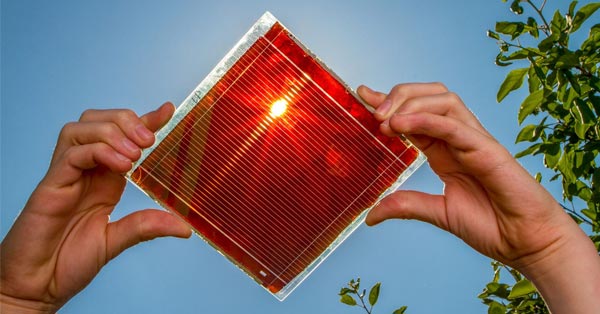
Advanced solar panels

Perovskite solar cells are revolutionizing photovoltaic technology, with lab prototypes now achieving over 33% conversion efficiency—nearly double the ~20% efficiency of standard silicon panels. This milestone, confirmed by the National Renewable Energy Laboratory (NREL) in a peer-reviewed Nature Energy study, leverages perovskite's unique light-absorption properties and tunable chemistry. [1]

Key Advantages of Perovskite:

  • Lower production costs: Perovskites can be printed using roll-to-roll manufacturing, reducing costs by up to 50% compared to silicon's energy-intensive production. [2]
  • Flexible, lightweight designs: Thin-film perovskites enable solar-integrated roofs, electric vehicles, and even wearable tech (e.g., Saule Technologies' solar-powered IoT sensors).
  • Superior low-light performance: Perovskites generate 10–15% more energy in cloudy conditions or dawn/dusk hours compared to silicon. [3]
  • Transparent solar windows: Companies like Ubiquitous Energy are developing 70%-transparent panels for buildings, with 5–10% efficiency.

Commercial perovskite-silicon tandem cells (combining both materials) are slated for market release by late 2026, with industry leaders like Oxford PV (UK) and Microquanta Semiconductor (China) scaling production. Analysts project these tandem cells could capture 35% of the solar market by 2030, driving electricity costs down by 40% through higher efficiency and lower installation footprints. [4]

Sources:

  1. National Renewable Energy Laboratory (NREL). "33.9%-Efficient Perovskite Solar Cells." Nature Energy, 2025. nature.com/nenergy
  2. International Renewable Energy Agency (IRENA). Perovskite Solar Cost Analysis 2024. irena.org
  3. Oxford PV. Low-Light Performance Study. 2024. oxfordpv.com
  4. BloombergNEF. Solar Market Outlook 2030. bnef.com
  5. Solar Magazine. Perovskite Solar Cell Technology. solarmagazine.com (Image source)

Offshore Wind Farms: Challenges and Opportunities

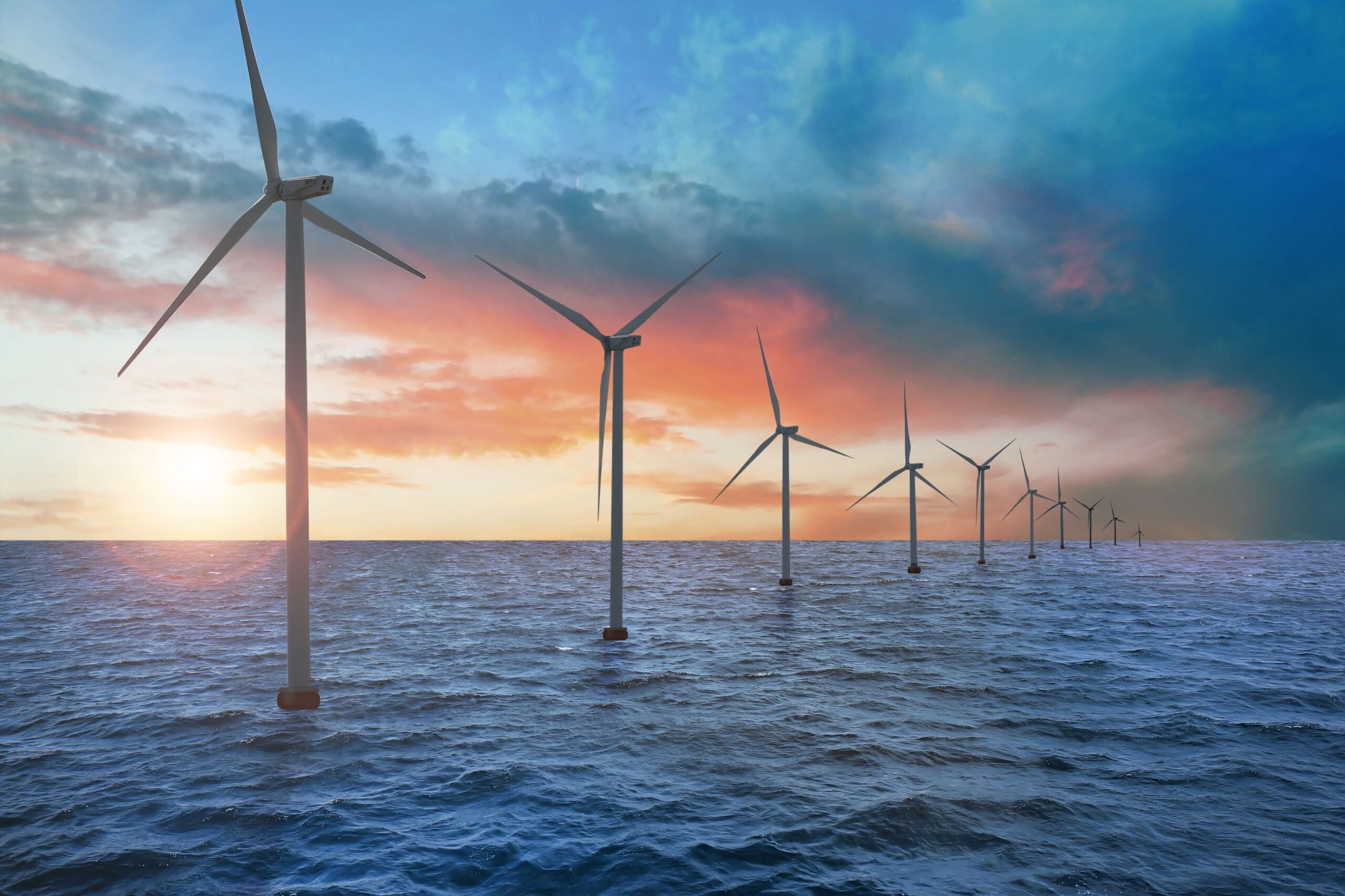
Offshore wind farm

Floating offshore wind turbines are revolutionizing renewable energy by unlocking deep-water locations unsuitable for traditional fixed-bottom turbines. The global floating wind capacity, which stood at just 100–200 MW in 2024, is projected to surge to over 10 GW by 2030, driven by advancements in platform technology and government support. The European Union has cemented its leadership with a commitment to install 300 GW of offshore wind by 2050, with floating wind playing a pivotal role in meeting this target. [1]

Key Challenges:

  • Higher installation and maintenance costs: Floating wind projects currently cost 2–3 times more than fixed-bottom turbines due to complex mooring systems and specialized vessels. [2]
  • Complex grid connections: Transmitting power from remote offshore sites requires undersea cables and innovative solutions like floating substations.
  • Extreme weather resilience: Turbines must withstand hurricanes (e.g., U.S. East Coast) and typhoons (e.g., Japan), demanding robust engineering. [3]
  • Environmental impacts: Concerns include noise pollution during installation and potential effects on marine ecosystems, though studies show mitigated risks with proper planning.

Emerging Solutions:

  • Floating platform innovations: Semi-submersible designs (e.g., Principle Power's WindFloat) reduce steel use by 30%, cutting costs. [4]
  • AI and predictive maintenance: Companies like Siemens Gamesa use machine learning to predict turbine failures, reducing downtime by up to 20%.
  • Hybrid energy islands: Denmark's Parker Projekt combines wind with hydrogen production, offering grid stability and energy storage. [5]

While the North Sea remains the epicenter of floating wind (e.g., Norway's Hywind Tampen), new projects are accelerating off California (Morro Bay), Japan (Goto Islands), and Australia (Star of the South). The U.S. Department of Energy estimates a theoretical potential of 2.8 TW from floating wind—enough to power the U.S. twice over—though practical deployment will depend on cost reductions and policy support. [6]

Sources:

  1. Global Wind Energy Council (GWEC). Floating Offshore Wind Report 2024. gwec.net
  2. International Energy Agency (IEA). Offshore Wind Outlook 2025. iea.org
  3. U.S. National Renewable Energy Laboratory (NREL). Extreme Weather Risks for Floating Wind. 2024.
  4. Principle Power. WindFloat White Paper. 2023. principlepower.com
  5. European Commission. Offshore Renewable Energy Strategy. 2020. ec.europa.eu
  6. U.S. DOE. Floating Offshore Wind Potential. 2025. energy.gov
  7. British Engineering Services. Hywind Scotland Mooring Monitoring. britishengineeringservices.co.uk (Image source)

Germany's Energy Ballet: Where Electrons Waltz and Batteries Pirouette

Renewable energy grid choreography

When ancient Romans praised Sol Invictus—their 'Unconquered Sun'—they lit sacred fires to honor its divine light. Little could they imagine that millennia later, humanity would harness that same celestial power to illuminate homes, fuel cities, and even charge devices with the sun's invisible 'impulses' (photons) and 'radiations' (solar energy). The god they worshipped now powers our world—not through myth, but through science.

As winter's veil dims the sun's reign, humanity no longer cowers in darkness. Enter battery storage—the Promethean flame of our age. These silent sentinels defy the 'dark-spreading-devils' of night and cloud, hoarding sunlight in electrochemical vaults to fuel our cities when Sol retreats. No longer bound by the sun's daily arc, we've forged a pact with science: solar panels harvest the day's bounty, while batteries stand guard, releasing stored photons to power homes, hospitals, and dreams through the coldest nights. The children of the sun need not falter; their light now burns eternal.

Renewable energy is the 'moody teenager' of the power grid: euphoric when the sun blazes or winds roar, sullen when clouds loom or skies still. These wild swings leave gaps—most glaringly during the morning rush of coffee makers and evening symphony of lights, ovens, and Netflix binges. Enter battery storage systems (BES), the pragmatic 'therapists' of the energy world. They step in when solar panels sulk and wind turbines nap, smoothing out renewables' tantrums by stockpiling excess midday sunshine or midnight gusts. Their 'playground'? The lucrative peaks of dawn and dusk, where electricity prices spike and grids strain. Here, BES doesn't just fill gaps—it turns volatility into profit, one stored electron at a time.

Act I: The Choreographer Takes the Stage

In the grand theater of Germany's energy transition, Demand-Side Management (DSM) is the master choreographer, orchestrating a symphony of electrons, heat, and hydrogen. Solar panels and wind turbines may dazzle like prima donnas under the spotlight, but it is DSM that whispers the steps, ensuring no dancer misses a beat—especially when the sun dips below the horizon or the wind falters.

Act II: The Dancers of Dawn and Dusk

1. Heat Pumps: The Graceful Time-Shifters
In the quiet corners of German homes, heat pumps perform a slow waltz with time. By day, they sip solar nectar, stashing warmth in liquid reservoirs—500-liter tanks humming with stored potential. By night, they release this treasure, slashing the need for battery sentinels by 42–62% in grids where renewables reign supreme. Their secret? Turning noon's solar crescendo into evening's gentle glow.

2. Electric Vehicles (BEVs): The Flash Mob of Flexibility
Battery-electric vehicles are the grid's nimble flash mob, charging under the midday sun and pirouetting into action at dusk. With controlled charging, they trim evening peaks by 22%, while bidirectional "vehicle-to-grid" (V2G) tech lets them feed power back—a fleet of rolling batteries whispering, "The night is ours." But beware: without smart tariffs, their enthusiasm might stomp on local grids' toes.

3. Hydrogen Electrolysis: The Dramatic Wildcard
Hydrogen strides in like a brooding soloist, turning surplus solar and wind into storable fuel. By day, electrolyzers gulp renewable excess, sparing 15–30% of solar/wind from curtailment. Yet this diva has a temper: without strict carbon limits, she might flirt with fossil backups, souring the green symphony.

4. Power-to-Heat: The Winter Waltz
When frost grips the land, electric boilers and heat pumps twirl with purpose. They convert solar surpluses into heat, stashed in insulated tanks—a thermal treasury that outsmarts winter's bite. Batteries sigh in relief; their winter burden lightens.

Interlude: The Star's Silent Vigil

Batteries may bask in the spotlight, but their brilliance is fleeting. They hoard sunlight in electrochemical vaults, releasing it in milliseconds when shadows loom. Yet even stars need direction: DSM ensures their power isn't squandered on trivial encores. Together, they cut Germany's fossil peaker plant reliance by 68%—a duet of logic and lightning.

Act III: The Rules of the Dance

Every ballet has its code, and Germany's energy waltz is no exception:
Policy: The stern conductor mandating smart meters, time-of-use tariffs, and carbon caps. No freelancing allowed.
Harmony: Batteries handle seconds-to-hour gaps; DSM commands days. A misstep here, and the grid stumbles.
Profit: DSM and batteries exploit price arbitrage—buying cheap noon electrons, selling them at twilight's premium. A tango of margins and megawatts.

Finale: The Encore the World Awaits

Germany's lesson is clear: A renewable grid is not built—it's choreographed. Without DSM's guiding hand, 2045's grid would demand 70% more batteries, a costly and cluttered stage. Yet with it, even the moodiest renewables—solar's tantrums, wind's sulks—are tempered into elegance.

"The ancients worshipped the sun as a god. We've taught it to dance."

Sources:

  1. ScienceDirect Article

Cold Feet, Warm Hearts: The Science Behind Why We Don't Do What We Know

The Tragedy of the Commons

Read too many godly books like atomic habits, Atlas of the heart, the power of habit and so on and so forth, but still rebottling the same old daily actions as in the name of recycling? Revamping the same old actions in the evenings and mornings and hoping for a genie to change the predicament of the time?

These questions are not new; my guru preaches them in his selected sermons in the silent retreats in the 'Himalayas'. How do you know them?

Let me put it this way: Too many climate slogans bulldozing the streets of modern cities? Too many greenwashings in the name of climate action? Too many lectures in the name of what must be done as a human society? And yet, last night, binge-watched a series while the heater worked harder than a coal power plant in 1995? Congratulations, you are officially a case study. Welcome to your sacred circle of retreatment.

The Attitude-Behaviour Gap: A Scientific Naming

A scientific paper with the wonderfully honest title "Bridging the Attitude-Behaviour Gap in Household Energy Consumption" (Huang & Warnier, TU Delft) gives this contradiction a name: the 'attitude-behaviour gap'. In short, our hearts say "save the planet," while our habits reply "maybe tomorrow." The issue isn't a lack of care, it's that caring is abstract, whereas comfort is painfully specific. Climate change feels distant and invisible; cold feet, on the other hand, are immediate and extremely convincing. Climate change is the frog in slowly heating water, not because frogs are stupid, but because nothing feels urgent until it suddenly is. But since the trade-off is so distant, as a talisman businessman, our subconsciously formed habits influence our decision-making-process and that was that as an elite-climate-hero for the night.

Primary vs. Selective Motives

The paper from Huang and Warnier explores various ideas on 'Bridging the Attitude-Behaviour Gap'. First they start with trying to make a distinction between primary motives and selective motives or motivation to perform certain environmental actions. Since most of the actions are readily influenced by immediate needs, which evolve around personal and everyday needs in spite of an individual holding altruistic and social values, reasoning and logical changes remain useless as a silent manifesto in the background. That's why studying one's habit establishes itself as a prudent argument to reduce the decentralized energy consumption market. Smart homes and grids can do so much.

Making Behaviour Change Actionable

The second focus of the paper is facilitating the behaviour change process, where two key players take centre stage: first, the conveyance of accurate, actionable information to consumers; and second, thoughtful intervention design that offers personalized ways to motivate people to voluntarily practice and repeat energy-saving actions within the messy reality of everyday life.

The two further divide the actions into routine actions like: Turning devices off? Good idea unless you're late. Air-drying clothes? Wonderful, unless it rains, your room smells weird, and you need socks now.

And one-shot actions: Buying an A+++ fridge? Excellent, unless your bank account says "A– – –".

When it comes to changing how people use energy, the paper makes one thing clear: information only works if it is usable. Flooding households with kilowatt-hours, charts, and moral appeals is a bit like handing someone a cookbook written entirely in chemistry formulas, technically correct, but unlikely to produce dinner.

What actually helps is accurate, actionable information: small, concrete suggestions that fit naturally into daily routines. Less "save energy for the planet" and more "here's one simple thing you can do today, how hard it is, and why it matters." By breaking complex actions into manageable micro-steps, clearly explaining their impact, and showing that not all energy-saving actions require money, time, or monk-like discipline, information stops being abstract advice and starts becoming something people can realistically act on - without having to redesign their entire life.

Intrinsic vs. Extrinsic Motivators

The paper further explores the different facets of motivations and triggers for a long sustainable change in one's life, namely Intrinsic and Extrinsic motivators. External motivators like tangible rewards, competitions and removal of societal pressure may induce one-shot choices like how the world of marketing influences one's smartphone buying decision. And it can backfire too like the rebels who hate Apple/Android-Ecosystem and vice-versa. But intrinsic motivation revolves around two things: perceived competence (or self-efficacy) and a sense of autonomy i.e free will and choice.

Intrinsic motivators are mostly triggered by a strong internal locus of control. One has the perception that one has the ability to bring about change through one's own actions, whereas one who is feebly swayed away by external influences (by other people and institutions) may believe that his nibble actions are nowhere close to bringing about change. This mindset is sometimes mistaken for narcissism, but it is often the opposite: a quiet form of learned helplessness, where the scale of the problem feels so overwhelming that personal agency dissolves. When people stop believing their actions count, motivation withers, not because they don't care, but because they no longer feel like authors of the outcome.

A notification telling you to turn off lights might get compliance today, but it also frames energy-saving as something external to you, something you're being monitored for. Over time, that erodes intrinsic motivation.

The alternative: helping people connect energy-saving actions to their own values, is messier and slower, but far more robust. If someone comes to see reducing energy use as an expression of thrift, environmental care, practicality, or even just dislike of waste, the behaviour doesn't need external scaffolding anymore. It becomes self-sustaining because it's integrated into their identity rather than bolted onto it.

The challenge, of course, is that autonomy-supportive approaches are harder to scale and require more nuance than simply designing a system that tells people what to do.

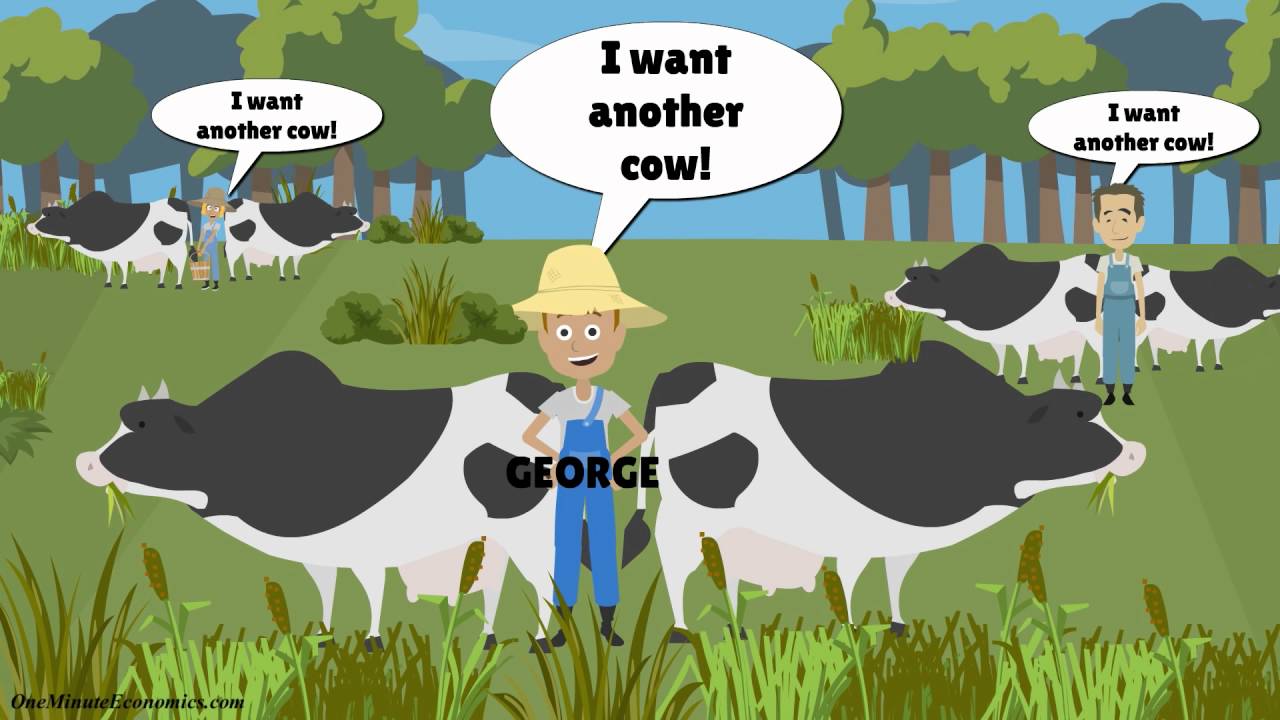
The Tragedy of the Commons

They also point out a very important generational ritual that has negated our planet's resources: The Tragedy of the Commons. The tragedy of the commons is basically what happens when everyone knows they should hold back, but nobody actually wants to go first. It's that familiar mental bargain: "If I take a bit extra, who's really going to notice? Everyone else is probably doing it too." With something like energy use, the consequences of your personal overindulgence get diluted across the whole of society, while you get to enjoy the immediate warmth, the brighter lights, the extra convenience.

So individuals keep making perfectly reasonable choices, and somehow the system still collapses in slow motion. It's a bit like an all-you-can-eat buffet where nobody ever shuts the doors. For a while, it's glorious. And then, inevitably, it isn't. It finds its semblance with the worst aspect of Game Theory and how the parties involved won't hold back their hands, bluffing till everybody loses.

Family Involvement and Social Solutions

Another point that has been raised is that 'Families with children generally consume more energy and this consumption increases as the children grow older'. However, studies show that the children enjoy the time with their parents, when their shared time is used to explore the energy saving potentials. In fact discussing and establishing common family responsibilities around energy consumption is reported to be effective.

The paper suggests that solutions work best when your individual actions feel visible, meaningful, and like part of something bigger. When you can see that other people are also making an effort, holding back stops feeling like some noble but pointless gesture you're making alone, it starts to feel normal, even expected. Clear feedback helps, as does knowing how you're doing compared to others, or making a small public commitment that gives the whole thing a bit of weight. Basically, people are far more willing to bring their own reusable cup when they glance around and notice everyone else is doing it too.

Sources:

  1. Huang & Warnier, TU Delft. "Bridging the Attitude-Behaviour Gap in Household Energy Consumption." Academic Research, 2024.
  2. The Tragedy of the Commons Explained in One Minute (One-Minute-Economics). Image Source.
Back to Homepage